
If you open your refrigerator and see water collecting under the bottom drawer, under the crisper drawers, or on the lower shelf, something is not draining correctly. This is a common refrigerator problem, especially in warm and humid areas like Tampa, FL.
Many homeowners first notice a small puddle inside the refrigerator. Then the water keeps coming back, the drawers become wet, food packaging gets soaked, or water starts leaking onto the floor.
A refrigerator should not have standing water inside. If water is pooling under the bottom drawer, the most common cause is a clogged or frozen defrost drain. However, there may also be problems with the door gasket, drain tube, evaporator area, temperature settings, or airflow.
Appliances Fix & Care LLC provides residential refrigerator repair in Tampa, FL, and can help diagnose why water is collecting inside your refrigerator.
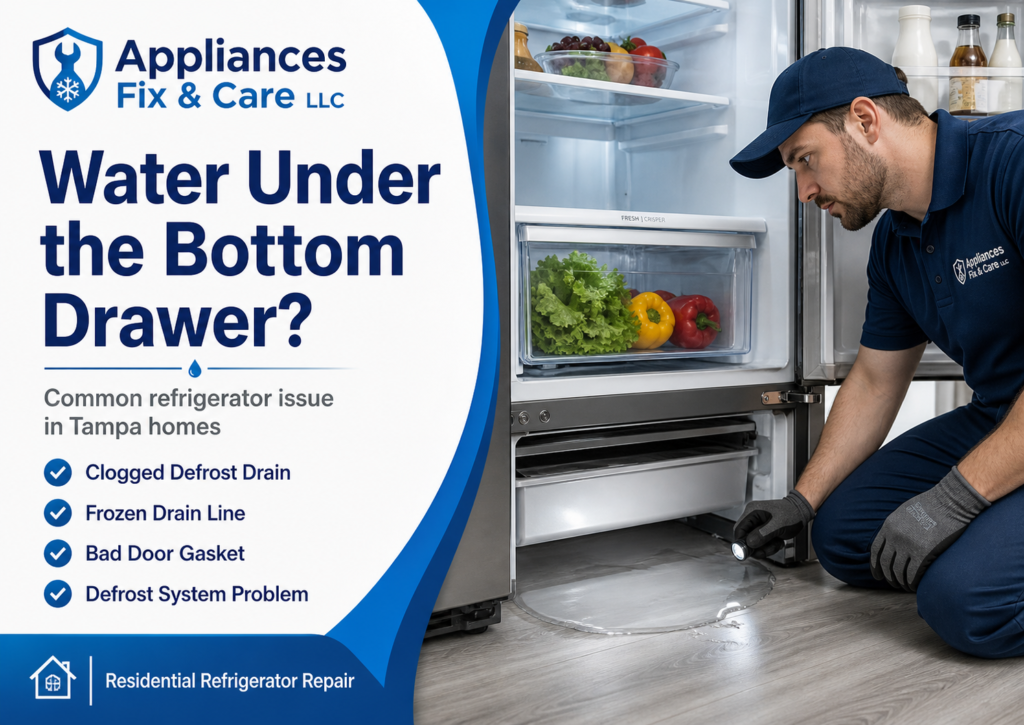
Why Is There Water Under the Bottom Drawer in My Refrigerator?
Water under the bottom drawer usually means the refrigerator’s defrost water is not draining properly.
During normal operation, your refrigerator removes frost from the evaporator coil. That melted frost is supposed to flow through a small drain hole and travel down to a drain pan underneath the refrigerator. From there, the water evaporates.
But if the drain line becomes clogged, frozen, blocked with food particles, or restricted by debris, the water has nowhere to go. Instead of draining out, it backs up into the refrigerator and collects under the bottom drawer.
This issue is often described as:
- Water under the crisper drawer
- Water pooling inside the refrigerator
- Fridge leaking water inside
- Refrigerator leaking from inside bottom
- Water under vegetable drawer
- Water collecting on the bottom shelf
- Water inside refrigerator but not outside
- Refrigerator drain clogged
If this keeps happening, the problem usually will not go away by itself.
Common Causes of Water Pooling Inside the Refrigerator
1. Clogged Defrost Drain
The most common cause of water under the bottom drawer is a clogged defrost drain.
Over time, the drain hole can become blocked by food crumbs, ice, dust, mold, or debris. When the refrigerator goes through the defrost cycle, water cannot flow down the drain tube. Instead, it backs up and runs into the fresh food section.
Signs of a clogged defrost drain include:
- Water under the crisper drawers
- Puddle inside the refrigerator
- Water comes back after you wipe it
- Ice buildup near the back wall
- Wet food packages
- Water leaking from inside the fridge
- No visible leak behind or under the refrigerator
A clogged drain may seem like a small issue, but if ignored, it can cause odors, mold, ice buildup, and repeated leaking.
2. Frozen Drain Line
Sometimes the drain is not just clogged — it is frozen. When the defrost drain freezes, melted water cannot pass through the line. This can cause water to collect inside the refrigerator or freeze into a sheet of ice under the bottom drawer.
This problem may happen because of:
- Low temperature setting
- Poor airflow
- Drain heater issue
- Ice blockage
- Defrost system problem
- Door not sealing properly
- Frequent door opening
In Tampa homes, where refrigerators work harder because of heat and humidity, drain and defrost issues can become more noticeable.
3. Food or Packaging Blocking the Drain Area
Sometimes items inside the refrigerator are pushed too far back and block the drain area or airflow vents. Large containers, plastic bags, produce, or food packaging can interrupt normal water flow.
When airflow is blocked, condensation can increase and water may collect at the bottom of the refrigerator.
To help prevent this, avoid pushing food directly against the back wall of the fridge. Leave space for air to circulate.
4. Damaged or Dirty Door Gasket
The door gasket is the rubber seal around the refrigerator door. If the gasket is dirty, damaged, loose, or not sealing properly, warm humid air can enter the refrigerator.
In Tampa, humidity can make this problem worse. When warm air enters the cold refrigerator, condensation forms. That moisture can collect on shelves, walls, drawers, and eventually under the bottom drawer.
Signs of a bad door gasket include:
- Moisture inside the refrigerator
- Water droplets on walls or shelves
- Refrigerator runs more often
- Door does not close tightly
- Mold or dirt on the gasket
- Food not staying cold enough
- Water pooling inside the fridge
A gasket problem can also make the refrigerator work harder and increase energy usage.
5. Incorrect Temperature Settings
If the refrigerator temperature is set too low, some areas may freeze. If it is set too high, condensation may increase. Either situation can contribute to water buildup inside the refrigerator.
A good refrigerator temperature is usually around 37°F, and the freezer is typically around 0°F.
If the temperature fluctuates too much, there may be a thermostat, sensor, control board, airflow, or cooling system problem.
6. Defrost System Problem
If the refrigerator’s defrost system is not working properly, frost and ice can build up around the evaporator area. When that ice melts, too much water may enter the drain area at once or leak into the fresh food section.
Defrost system problems may involve:
- Defrost heater
- Defrost thermostat
- Defrost sensor
- Control board
- Evaporator fan
- Ice blockage
This type of issue usually requires proper diagnosis because the visible water may only be a symptom of a deeper refrigerator problem.
7. Refrigerator Not Level
If the refrigerator is not level, water may not drain in the correct direction. Instead of flowing toward the drain, water may collect inside the refrigerator.
This can happen after moving the refrigerator, installing new flooring, adjusting the legs, or pushing the appliance back into place.
A technician can check whether the refrigerator is sitting correctly and whether the drain path is working as designed.
Is Water Under the Crisper Drawer Dangerous?
Water inside the refrigerator is not always dangerous right away, but it should not be ignored.
Standing water can lead to:
- Mold growth
- Bad smell inside the refrigerator
- Wet food packaging
- Spoiled produce
- Ice buildup
- Damage to drawers or shelves
- Water leaking onto the floor
- Electrical or sensor issues if moisture spreads
If the water keeps returning after you clean it, the cause needs to be fixed.
What Can You Check Before Calling for Service?
Before scheduling refrigerator repair, you can check a few simple things:
- Wipe the water and see how quickly it comes back.
- Check if food is pushed against the back wall.
- Make sure the refrigerator door closes tightly.
- Inspect the door gasket for dirt, cracks, or gaps.
- Check if the refrigerator is too cold or too warm.
- Look for ice buildup near the back wall or under the drawer.
- Avoid overloading the refrigerator.
Do not force tools into the drain hole or pour harsh chemicals inside the refrigerator. You can damage the drain tube, liner, or internal parts.
If water continues to pool under the bottom drawer, it is better to have the refrigerator inspected.
Refrigerator Repair in Tampa, FL
If you have water under the bottom drawer in your refrigerator, Appliances Fix & Care LLC can help.
We provide residential refrigerator repair in Tampa, FL, including diagnosis of clogged defrost drains, frozen drain lines, door gasket issues, defrost system problems, airflow problems, and cooling issues.
Our technicians can inspect the refrigerator, identify why water is collecting inside, and explain the best repair option.
We service common refrigerator problems, including:
- Water pooling under bottom drawer
- Water under crisper drawer
- Refrigerator leaking water inside
- Fridge leaking from inside bottom
- Clogged refrigerator drain
- Frozen defrost drain
- Refrigerator not cooling properly
- Ice buildup inside refrigerator
- Refrigerator making noise
- Freezer not freezing
- Ice maker not working
If your refrigerator is leaking water inside, do not wait until the problem gets worse. Schedule residential refrigerator repair in Tampa, FL with Appliances Fix & Care LLC.
Don’t Ignore Water Inside Your Refrigerator
Water under the bottom drawer may look like a small problem, but it usually means the refrigerator is not draining properly.
A clogged or frozen drain can keep leaking again and again. A bad door gasket can let humid Tampa air inside the fridge. A defrost issue can create ice buildup and cause more water problems later.
If your refrigerator has water pooling inside, under the crisper drawers, or on the lower shelf, Appliances Fix & Care LLC can help diagnose and repair the issue.
Need refrigerator repair in Tampa, FL? Contact Appliances Fix & Care LLC to schedule service.
FAQ
Why is there water under the bottom drawer in my refrigerator?
The most common reason is a clogged or frozen defrost drain. When water cannot drain properly, it backs up and collects under the bottom drawer or crisper drawers.
Why does water keep coming back after I wipe it?
If the water keeps returning, the drain line may still be clogged or frozen. There may also be a door gasket, airflow, defrost, or temperature control issue.
Is water under the crisper drawer normal?
No. A small amount of condensation can happen, but standing water under the crisper drawer is not normal. It usually means something is blocked or not draining correctly.
Can humidity in Tampa cause water inside the refrigerator?
Yes. Tampa’s humidity can make condensation worse, especially if the refrigerator door gasket is not sealing properly or the door is opened often.
Can I unclog the refrigerator drain myself?
Sometimes homeowners try to clean the drain, but using sharp tools or chemicals can damage the refrigerator. If the drain is frozen, blocked deep inside, or keeps clogging again, it is better to call a technician.
Do you repair refrigerators leaking water inside in Tampa, FL?
Yes. Appliances Fix & Care LLC provides residential refrigerator repair in Tampa, FL, including refrigerators leaking water inside, clogged defrost drains, frozen drain lines, and water under crisper drawers.