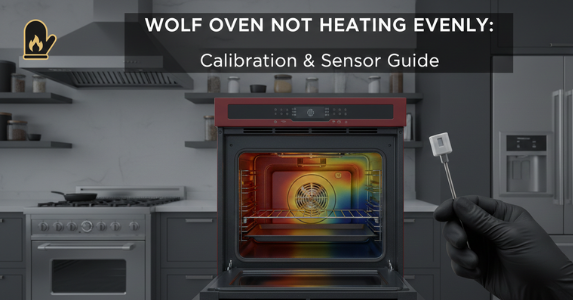
A Wolf oven is designed to deliver professional level performance, precise temperature control, and consistent cooking results. When your Wolf oven is not heating evenly, it can affect baking quality, roasting precision, and overall kitchen efficiency. Uneven heating leads to undercooked centers, burnt edges, and unpredictable results that frustrate home cooks and professional chefs alike.
In this comprehensive guide, we will explore the causes of uneven heating in a Wolf oven, how calibration works, the role of temperature sensors, and when professional repair is necessary to restore peak performance.
Why Even Heating Matters in a Wolf Oven
Wolf ovens are engineered for accuracy. Whether you are baking delicate pastries or roasting meats, consistent heat distribution ensures:
- Even browning
- Proper internal cooking temperatures
- Reliable baking performance
- Reduced cooking time adjustments
- Professional quality results
When heat distribution becomes inconsistent, it often signals an underlying mechanical or calibration issue.
Common Signs Your Wolf Oven Is Not Heating Evenly
Recognizing the symptoms early can prevent more serious damage. Look for the following warning signs:
1. Food Cooks Faster on One Side
If one side of your dish browns more quickly than the other, the oven may have airflow or sensor issues.
2. Temperature Fluctuations
If the oven temperature rises and drops unpredictably, calibration or sensor malfunction may be the cause.
3. Longer Cooking Times
When food takes significantly longer to cook than recipes suggest, the oven may not be reaching the set temperature.
4. Burnt Bottoms and Undercooked Centers
This is often a sign of heating element imbalance or faulty temperature regulation.
5. Inconsistent Preheating
If the oven indicates it has preheated but food still cooks unevenly, the internal temperature may not match the display.
Main Causes of Uneven Heating in a Wolf Oven
Several components work together to maintain consistent heat. When one fails, uneven cooking occurs.
Faulty Temperature Sensor
The temperature sensor monitors internal heat and communicates with the control board. If it becomes inaccurate or damaged, the oven may overheat or underheat.
Calibration Issues
Over time, oven calibration can drift. Even a small difference of 15 to 25 degrees can significantly affect baking results.
Malfunctioning Heating Elements
Wolf ovens use bake and broil elements to distribute heat. If one element weakens or fails, heat distribution becomes uneven.
Convection Fan Problems
In convection models, the fan circulates hot air evenly. A failing fan motor or blocked airflow can create hot and cold spots.
Control Board Malfunction
The electronic control board regulates temperature cycles. A defective board may cause inconsistent heating patterns.
Understanding Wolf Oven Calibration
Calibration ensures the oven temperature matches the setting displayed on the control panel. Over time, slight deviations can occur due to normal wear or electrical variations.
How Calibration Works
Wolf ovens allow minor temperature adjustments through the control panel settings. Calibration typically involves:
- Using an oven thermometer to measure actual temperature
- Comparing it to the set temperature
- Adjusting the offset in the control settings
If the oven consistently runs too hot or too cool, recalibration can restore accuracy.
However, calibration will not fix mechanical failures such as a damaged sensor or faulty heating element.
The Role of the Oven Temperature Sensor
The temperature sensor is one of the most critical components in maintaining even heating.
How It Functions
- Measures internal air temperature
- Sends signals to the control board
- Regulates heating cycles
If the sensor provides incorrect readings, the oven will not maintain consistent heat.
Signs of a Failing Sensor
- Oven temperature differs greatly from display
- Random overheating
- Food consistently undercooked
- Error codes on the control panel
Replacing a faulty sensor often restores even heating performance.
DIY Troubleshooting Steps
Before calling for professional repair, you can safely perform these checks:
- Ensure oven racks are positioned properly
- Avoid overcrowding the oven
- Use an accurate oven thermometer
- Check for visible damage to heating elements
- Reset the oven by turning off power briefly
If uneven heating persists, professional diagnosis is recommended.
When to Call a Professional Technician
Wolf ovens are premium appliances with advanced electronics. Attempting complex repairs without proper training can cause further damage.
Professional technicians can:
- Test the temperature sensor with a multimeter
- Inspect and replace heating elements
- Diagnose control board issues
- Verify convection fan operation
- Perform precise recalibration
Expert service ensures safe and accurate repairs.
Appliances Fix & Care: Expert Wolf Oven and Range Repair
When your Wolf oven is not heating evenly, Appliances Fix & Care provides specialized repair services for premium kitchen appliances. Their trained technicians accurately diagnose calibration problems, faulty sensors, heating element failures, and control board issues. They replace damaged components with high quality compatible parts and ensure the oven reaches and maintains correct temperatures. Appliances Fix & Care also services Wolf ranges, restoring burner performance and ensuring complete cooking system functionality. Their professional repair process improves safety, extends appliance lifespan, and restores reliable cooking performance for both residential and professional kitchens.
Preventing Uneven Heating in the Future
Routine maintenance plays a key role in keeping your Wolf oven operating efficiently.
- Clean the oven regularly to prevent airflow blockage
- Avoid slamming the oven door
- Schedule periodic professional inspections
- Monitor temperature accuracy with an oven thermometer
- Address minor performance issues early
Preventative care reduces the risk of costly repairs and maintains consistent cooking results.
Cost of Repairing a Wolf Oven That Heats Unevenly
Repair costs vary depending on the issue:
- Sensor replacement is generally affordable
- Heating element replacement is moderately priced
- Control board repairs may cost more
- Convection fan motor replacement varies by model
Early diagnosis often prevents more expensive component failures.
Final Thoughts
A Wolf oven not heating evenly can compromise food quality, cooking accuracy, and overall kitchen efficiency. Whether the problem stems from calibration drift, a faulty temperature sensor, malfunctioning heating elements, or airflow issues, timely repair is essential.
Proper calibration and sensor maintenance ensure consistent heat distribution and reliable performance. If basic troubleshooting does not resolve the issue, professional repair services can restore your oven to its original precision.
Maintaining your Wolf oven with expert care ensures long term durability, consistent results, and the high performance cooking experience you expect from a premium appliance.