
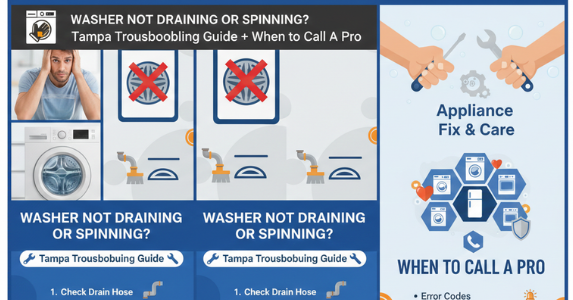
A washing machine that refuses to drain or spin can quickly disrupt your household routine. It can leave clothes soaking wet, extend laundry times, and even cause water damage if ignored. For residents in Tampa, understanding why your washer is not performing as it should, and knowing the steps to troubleshoot or repair it, is essential. This guide provides a comprehensive look at common causes, safe DIY solutions, and guidance on when to call a professional appliance repair service.
Understanding Why Your Washer Is Not Draining or Spinning
A washer not draining or spinning is often a symptom of an underlying mechanical or electrical issue. While some problems are simple to fix, others may require professional attention. Here are the most common causes:
Clogged or Blocked Drain Hose
The drain hose is responsible for carrying water from your washer to your home’s plumbing system. Over time, lint, small clothing items, or soap residue can accumulate and block the hose. A clogged hose prevents the washer from draining correctly. Signs of a clogged hose include slow drainage, water left in the drum after the cycle, and unusual noises during draining.
Solution: Detach the drain hose and inspect it for debris or kinks. Flush the hose with water to remove obstructions. Ensure it is reconnected properly, without bends that could impede water flow.
Faulty Pump
The drain pump is another common culprit. It moves water out of the machine during the spin and drain cycles. If the pump becomes jammed with debris or fails due to mechanical wear, the washer may fill with water but fail to drain. A malfunctioning pump can also cause strange humming or grinding noises.
Solution: Inspect the pump for clogs or foreign objects. Many pumps are accessible from the back or bottom of the washer. If the pump is damaged, replacement is usually required.
Defective Lid Switch
Most top-loading washers include a safety feature known as a lid switch. The washer will not spin if the lid is open or if the switch is malfunctioning. A broken lid switch prevents the washer from completing the spin cycle even if it drains correctly.
Solution: Test the lid switch by closing the lid firmly and listening for a click. If you do not hear a click or the washer does not spin, the lid switch may need replacement.
Unbalanced or Overloaded Load
A washer will not spin properly if the load inside the drum is unbalanced. Heavy items such as towels or blankets can cause the drum to tilt to one side, triggering the machine’s safety mechanism. Similarly, overloading the washer can prevent both draining and spinning.
Solution: Remove some items to reduce the load or redistribute clothes evenly around the drum. Running smaller loads can prevent future unbalanced cycles.
Worn Drive Belt
In belt-driven washers, a worn, loose, or broken belt can prevent the drum from spinning. The belt connects the motor to the drum and allows it to rotate during the spin cycle. Over time, belts can degrade, crack, or snap.
Solution: Inspect the drive belt for wear or damage. Replacing the belt often requires removing panels or accessing the motor assembly. Follow the manufacturer’s instructions for safe replacement.
Motor or Control Board Issues
If your washer has no response during the spin or drain cycle, the motor or control board may be faulty. Electrical or mechanical failures in these components prevent the washer from functioning properly. Attempting DIY repairs on motors or control boards without experience can be dangerous.
Solution: Contact a licensed appliance repair technician. Professionals can safely diagnose motor or control board issues and perform necessary repairs.
Safe DIY Troubleshooting Steps
While some washer problems require professional intervention, there are safe steps homeowners can take before calling a repair service:
- Check the Power Supply: Ensure the washer is plugged in, the circuit breaker is on, and the outlet is functioning.
- Inspect Hoses and Filters: Clear any blockages in the drain hose or internal filters.
- Redistribute the Load: Spread clothing evenly to avoid unbalanced cycles.
- Test the Lid Switch: Verify that the lid switch functions correctly.
- Run a Diagnostic Cycle: Some modern washers have diagnostic modes that can help identify the issue.
If these steps do not resolve the problem, a professional inspection is recommended to prevent further damage.
Signs You Need a Professional Appliance Repair Service
While minor issues can be resolved at home, certain signs indicate it is time to call an expert:
- Persistent water left in the drum after cycles
- Washer does not spin or drain despite load adjustments and lid switch testing
- Unusual noises such as grinding, buzzing, or squealing
- Burning smells or smoke
- Electrical issues or frequent circuit breaker trips
Professional technicians have specialized tools, training, and experience to safely diagnose and repair complex washer problems.
How Appliance Repair Services Help
Appliance repair services in Tampa provide essential support for homeowners dealing with malfunctioning washers. Their services include:
- Accurate Diagnosis: Professionals can quickly identify hidden issues that may be missed during DIY troubleshooting.
- Safe Repairs: Technicians handle electrical and mechanical components safely, preventing further damage or injury.
- Part Replacement: Certified repair services provide genuine replacement parts to ensure long-term performance.
- Preventive Maintenance: Regular inspections and maintenance extend the life of your washer and reduce the likelihood of future breakdowns.
By relying on professional appliance repair, homeowners save time, avoid costly mistakes, and maintain reliable washer performance.
How to Contact Appliance Repair Services in Tampa
For washer issues that cannot be resolved through simple troubleshooting, contacting a local appliance repair company is the most efficient solution. Many companies offer:
- Same-day service
- Transparent pricing and estimates
- Guaranteed repairs
To schedule service, call your trusted appliance repair company or visit their website to book an appointment online. Provide details about your washer, the symptoms, and any troubleshooting steps already taken. This helps technicians prepare and ensures faster resolution.
Conclusion
A washer that does not drain or spin can be frustrating, but most problems have identifiable causes such as clogged hoses, faulty pumps, unbalanced loads, or defective lid switches. Simple troubleshooting steps can resolve minor issues, but professional appliance repair ensures complex problems are handled safely and effectively. For Tampa residents, reaching out to a certified appliance repair service provides peace of mind, prolongs the life of your washer, and keeps laundry day running smoothly.
Regular maintenance, prompt repairs, and professional guidance can save you from costly replacements and ensure your appliances continue to function efficiently for years.