
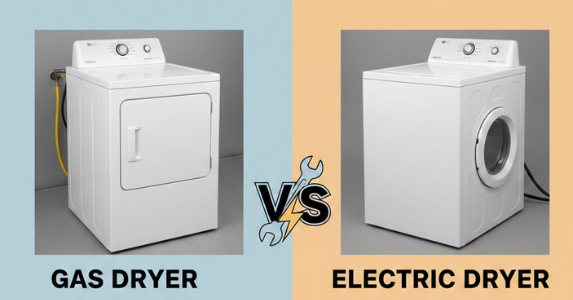
Choosing between a gas dryer and an electric dryer is a common decision for homeowners. While both appliances serve the same purpose, they operate very differently and come with their own sets of repair challenges. Understanding the common repair issues associated with gas dryers and electric dryers can help you identify problems early, reduce downtime, and make informed maintenance decisions.
This guide explains how each type of dryer works, the most frequent repair issues, and when professional service is required.
How Gas Dryers Work
Gas dryers use natural gas or propane to produce heat. Electricity is still required to power the motor, control board, igniter, and sensors, but the heating process relies on a gas burner assembly.
Key components of a gas dryer include:
- Gas valve and burner assembly
- Igniter
- Flame sensor
- Thermal fuse and thermostats
- Drum motor and belt
- Control board
Because gas dryers combine electrical and gas components, their repair process can be more complex.
Common Repair Issues in Gas Dryers
Dryer Not Heating
One of the most common gas dryer problems is lack of heat. This can be caused by a faulty igniter, defective flame sensor, or a failed gas valve solenoid. If the igniter does not glow or the gas does not ignite, the dryer will tumble but produce no heat.
Weak or Inconsistent Heat
Gas dryers that heat unevenly often have failing solenoids or restricted airflow. A clogged vent can cause the burner to shut off repeatedly as a safety measure.
Gas Smell During Operation
A noticeable gas smell is a serious issue. It may indicate a loose gas connection, damaged gas valve, or faulty burner assembly. This problem should never be ignored and requires immediate professional attention.
Dryer Shuts Off Mid Cycle
Overheating due to lint buildup, blocked vents, or a faulty thermostat can cause gas dryers to shut down during operation. The thermal fuse may also trip to prevent fire hazards.
Igniter Glows but No Flame
This issue usually points to defective gas valve coils. While the igniter functions correctly, the gas does not release, preventing ignition.
How Electric Dryers Work
Electric dryers rely entirely on electricity to generate heat. They use heating elements that warm the air, which is circulated through the drum by a blower motor.
Key components of an electric dryer include:
- Heating element
- Thermal fuse
- High limit thermostat
- Drum motor and belt
- Timer or electronic control board
Electric dryers are simpler in design, which often makes diagnosis more straightforward.
Common Repair Issues in Electric Dryers
Dryer Not Heating
The most frequent electric dryer issue is a burned out heating element. Other causes include a blown thermal fuse, faulty thermostat, or wiring problems.
Dryer Will Not Turn On
Electric dryers may fail to start due to a defective door switch, damaged power cord, blown fuse, or control board malfunction.
Clothes Taking Too Long to Dry
Poor drying performance is often linked to clogged vents, weak heating elements, or restricted airflow. This issue affects both gas and electric dryers but is especially common in electric models.
Tripping Circuit Breakers
Electric dryers draw significant power. Frequent breaker trips may indicate a shorted heating element, damaged wiring, or incorrect electrical installation.
Overheating
When airflow is blocked or thermostats fail, electric dryers may overheat. This can lead to repeated shutdowns and damage to internal components.
Comparing Repair Complexity
Gas dryers generally have more complex repairs due to the combination of gas and electrical systems. Safety considerations also make professional repair more critical.
Electric dryers are usually easier to repair and diagnose. Replacement parts such as heating elements and thermostats are often more affordable and widely available.
However, both dryer types require proper ventilation and regular maintenance to prevent serious issues.
Which Dryer Has Higher Repair Costs
Gas dryer repairs typically cost more because:
- Gas components are more specialized
- Safety testing is required after repairs
- Fewer technicians are qualified for gas appliance servicing
Electric dryer repairs are often less expensive, but frequent heating element replacements can add up over time.
Preventing Common Dryer Repairs
Regular maintenance can significantly reduce repair needs for both gas and electric dryers.
Best practices include:
- Cleaning the lint trap after every cycle
- Inspecting and cleaning the dryer vent regularly
- Avoiding overloads
- Scheduling professional maintenance checks
- Addressing unusual noises or smells immediately
When to Call a Professional
You should always contact a professional technician if:
- Your gas dryer emits a gas smell
- The dryer overheats repeatedly
- Electrical breakers trip frequently
- The dryer shuts off unexpectedly
- DIY troubleshooting does not resolve the issue
Attempting repairs without proper training can worsen the problem and create safety risks.
Trust Appliances Fix & Care for Dryer Repairs
If your gas or electric dryer is giving you trouble, Appliances Fix & Care is here to help. Our experienced technicians are trained to diagnose and repair all types of dryers safely and efficiently. Whether your dryer is not heating, making noise, or shutting down unexpectedly, you can rely on professional service you can trust. Call Appliances Fix & Care today to schedule expert dryer repair and restore your appliance to peak performance.