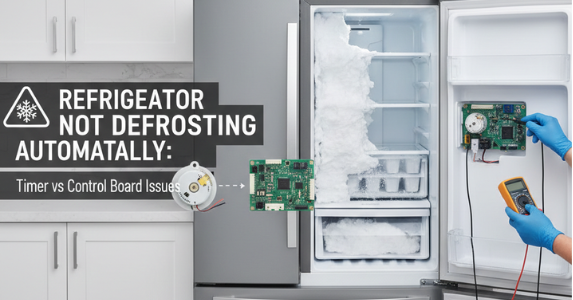
A refrigerator that is not defrosting automatically can quickly turn into a major household problem. Ice buildup inside the freezer restricts airflow, reduces cooling efficiency, and can eventually cause the refrigerator compartment to become warm. If left unresolved, this issue can strain the compressor and increase energy bills.
Modern refrigerators rely on either a mechanical defrost timer or an electronic control board to regulate the automatic defrost cycle. When one of these components fails, frost accumulates on the evaporator coils and cooling performance declines. Understanding the difference between timer and control board issues is essential for accurate diagnosis and repair.
How the Automatic Defrost System Works
Frost free refrigerators are designed to prevent excessive ice buildup by running a defrost cycle several times a day. During normal operation:
- Moisture in the air freezes on the evaporator coils
- The compressor shuts off at scheduled intervals
- The defrost heater activates to melt accumulated frost
- Melted water drains through a tube into a pan beneath the unit
- The compressor resumes cooling once the cycle is complete
If any part of this system fails, frost will continue to build up and block airflow between the freezer and fresh food sections.
Signs Your Refrigerator Is Not Defrosting Properly
Recognizing the warning signs early can prevent more expensive repairs later.
Thick frost or solid ice forming on the back wall of the freezer is one of the most common indicators. You may also notice that the freezer appears cold while the refrigerator section feels warm. This happens because frozen evaporator coils block cold air from circulating.
Other signs include:
- Longer cooling cycles
- Higher electricity bills
- Water leaking after manual defrosting
- Unusual fan noises
- Food spoiling faster than usual
If these symptoms return shortly after manually defrosting the appliance, the automatic defrost system is likely malfunctioning.
Mechanical Defrost Timer Problems
Older refrigerators typically use a mechanical defrost timer to control when the system switches between cooling and defrost modes.
The timer advances continuously and activates the heater at preset intervals. After a specific period, it switches the refrigerator back into cooling mode.
When a defrost timer fails, several problems may occur:
- The refrigerator may remain stuck in cooling mode, preventing the heater from melting frost
- The refrigerator may become stuck in defrost mode, causing the compressor to stop running
- Frost may accumulate quickly on evaporator coils
- No clicking sound is heard when attempting to manually advance the timer
Mechanical timers are generally simpler to diagnose and replace compared to electronic systems.
Electronic Control Board Issues
Newer refrigerators rely on an electronic control board rather than a mechanical timer. The control board manages multiple systems including temperature regulation, fan operation, and defrost cycles.
Instead of operating on fixed intervals, the control board uses input from temperature sensors to determine when a defrost cycle is necessary. This allows for more efficient and adaptive operation.
However, when the control board malfunctions, the refrigerator may experience:
- Inconsistent cooling patterns
- Irregular or skipped defrost cycles
- Flashing error codes
- Simultaneous failure of multiple components
Because control boards are more advanced and interconnected, diagnosing the issue often requires professional tools and technical expertise.
Key Differences Between Timer and Control Board Issues
A mechanical defrost timer operates on a fixed schedule and is commonly found in older refrigerator models. It is a simpler component and typically less expensive to replace.
An electronic control board, on the other hand, is found in modern refrigerators and relies on sensors and programming to manage defrost cycles. While more energy efficient and precise, it is also more complex and costly to repair if damaged.
Identifying which system your refrigerator uses is the first step toward proper diagnosis.
Other Components That May Affect the Defrost System
Although the timer or control board often causes defrost failure, other parts may also be responsible.
The defrost heater is responsible for melting ice during the defrost cycle. If it burns out, frost will not melt even if the timer or board activates.
The defrost thermostat acts as a safety device to prevent overheating. If it fails, it may block power to the heater.
The thermistor monitors internal temperatures and sends signals to the control board. Incorrect readings can prevent proper defrost timing.
A full inspection ensures that the true cause of the problem is identified before replacing parts.
Why Professional Diagnosis Is Important
Replacing the wrong component can lead to unnecessary expenses and recurring issues. A professional technician can:
- Test electrical continuity
- Measure heater resistance
- Inspect temperature sensor readings
- Evaluate control board signals
- Confirm proper drainage function
Accurate testing ensures that the correct part is repaired or replaced the first time.
How Appliances Fix & Care Helps Resolve Defrost Issues
When a refrigerator is not defrosting automatically, Appliances Fix & Care provides comprehensive diagnostic and repair services. Their technicians carefully inspect whether the issue stems from a faulty defrost timer, a malfunctioning control board, a damaged heater, or a defective thermostat. Using proper diagnostic equipment, they verify electrical connections, replace worn components with high quality parts, and ensure the defrost system cycles correctly. Appliances Fix & Care not only restores proper cooling performance but also helps protect the compressor from strain caused by ice buildup. Their professional repair approach improves efficiency, reduces energy waste, and extends the lifespan of the refrigerator.
Preventing Future Automatic Defrost Problems
Routine maintenance plays a key role in preventing defrost system failures.
- Clean condenser coils regularly
- Avoid blocking air vents with food items
- Check door seals for air leaks
- Keep freezer temperatures at recommended levels
- Schedule periodic professional inspections
Proper maintenance reduces stress on internal components and ensures reliable cooling.
Repair or Replace Considerations
If the refrigerator is relatively new, repairing a defrost timer, heater, or sensor is usually cost effective. For older units experiencing repeated control board failures, replacement may be more practical.
A professional assessment can help determine whether repair or replacement offers the best long term value.
Final Thoughts
A refrigerator not defrosting automatically can lead to ice buildup, poor cooling, and higher energy consumption. Whether the issue involves a mechanical defrost timer or an electronic control board, timely diagnosis is essential.
Understanding how these systems operate helps homeowners recognize warning signs and seek proper repair. With expert service and regular maintenance, your refrigerator can maintain efficient, frost free performance for years to come.